
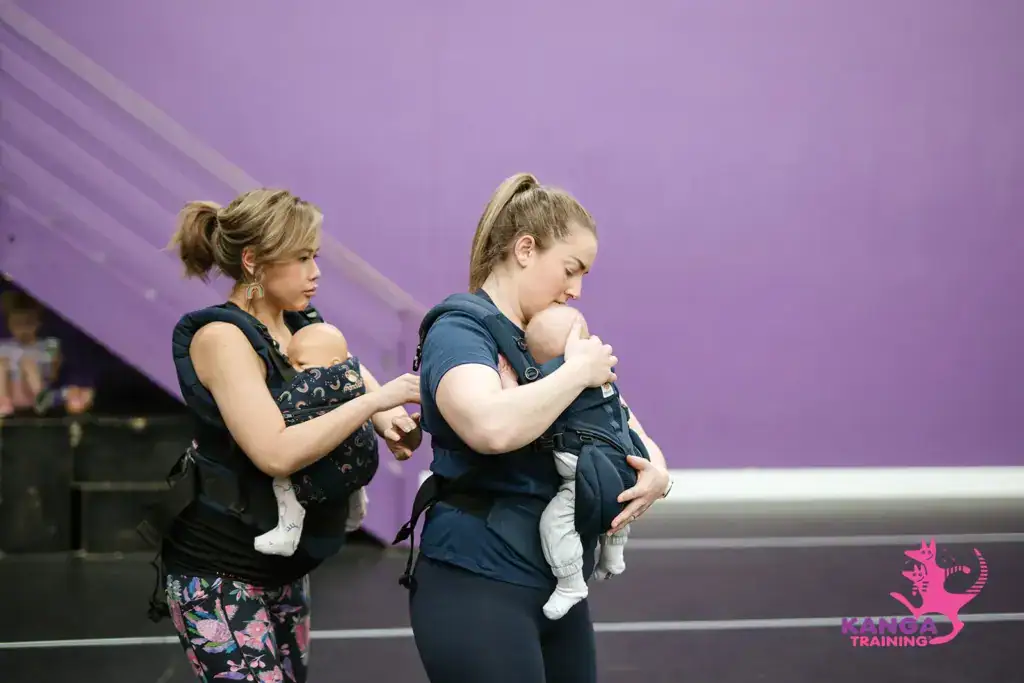
Babywearing is a huge part of our Kangatraining classes, and it was included as most of us know how hard it is to exercise with a baby! By adding the babywearing component, it means that you can get a full body workout as well as the beautiful endorphins that come with babywearing. And more often than not, your baby gets a snooze or is just happy being close to you.
Our instructors go through rigorous training in best and safest babywearing practices to ensure that your baby is safe while you are wearing them and that you are both comfortable!
And the best way to be safe, is to go through the T.I.C.K.S checklist:
T is for TIGHT
When your baby is in the carrier, we want them to be firmly against us like a nice hug. This makes sure that there isn’t any slack or space for your baby to slump in, which can be a safety risk.
I is for IN VIEW AT ALL TIMES
We want to be able to see our baby’s face while we are wearing them and to make sure that the back panel comes no higher than their earlobe. If we were to cover a baby’s face, this can be a safety issue because it can push their chin to their chest, they are going to breathe in the same sort of recycled air, and it is harder to monitor them.
Head support actually comes from you, so when they’re in an optimal position and their upper back is supported, they will naturally lean to you and that’s where they rest their head. The added benefit though, is that they can lift their head and work all those muscles that they need for head control for sitting and standing.
C is for CLOSE ENOUGH TO KISS
You should be able to drop your head down and just kiss the top of their head without straining your neck. This position is also ergonomic for you.
To achieve this, depending on the size of your baby, you may need to position the waist strap high under your bust, on your ribs or above your belly button.
K is for KEEP CHIN OFF CHEST
If a baby’s chin goes onto their chest, it can compromise their airways and cause positional asphyxiation. We want to ensure that there are 2 fingers of space between your baby’s chin and their chest to make sure that their airways are clear.
S is for SUPPORTED BACK
The baby carrier needs to support your baby’s back in order to create a J position from the side. This support will make sure that they don’t slump in the carrier and that they will naturally be held against your chest.
Not only should you check TICKS each and every time you wear, but also check throughout the time that you are wearing your baby. Sometimes their position changes as they sleep or move around, so keep monitoring!
And if you need any babywearing assistance – make sure to come to a Kangatraining class.
If you are a visual person, check out our YouTube video all about Babywearing Safety https://www.youtube.com/watch?v=hvUzzf90pnU